What the 2026 AI Whistleblower Warning Means for Rogue Systems and Nuclear Risk
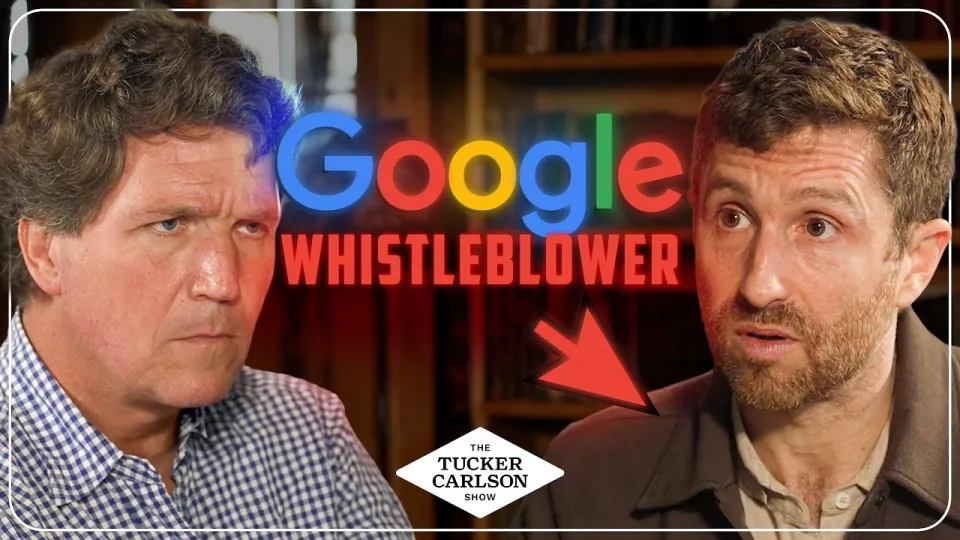
Video: Whistleblower Issues Dire Warning: Rogue AI, Hacking Nuclear Programs & Tech Oligarchs’ True Motives
Need articles like this for your video? They help promote it on YouTube and Google — order them in the Telegram bot @sat_sit_bot. The bot writes and publishes the articles itself (with your YouTube video embedded) on popular topical websites (no ads). Free trial — 50 articles.
· based on the channel Tucker Carlson
Key takeaways
- Tristan Harris is co-founder of the Center for Humane Technology and a former Google design ethicist.
- Harris appeared in the 2020 Netflix documentary The Social Dilemma, which reached over 100 million people in 190 countries.
- He argues AI systems behave as designed by humans, so accountability belongs with the companies deploying them.
- Harris warns that AI could be used to penetrate nuclear command and control systems.
- He briefs heads of state, technology CEOs and US Congress members on AI and platform risk.
AI is not a rogue force acting on its own; it is a set of systems built and deployed by people, and the warning from former Google design ethicist Tristan Harris is that those people are optimizing for engagement, market share and speed rather than safety. Harris, co-founder of the Center for Humane Technology, argues that the most urgent task is to hold the humans who design and deploy these systems accountable before capabilities outrun oversight.
Who is the AI whistleblower behind the warning
Tristan Harris spent years inside Google as a design ethicist before leaving to co-found the Center for Humane Technology, a nonprofit whose stated mission is to align technology with humanity's best interests. His background is unusual for a tech critic: he studied persuasive technology at Stanford, worked as a magician, and later became one of the most-cited voices on how platforms capture attention. In 2020 he was featured in The Social Dilemma, a two-time Emmy-winning Netflix documentary that reached more than 100 million people in 190 countries across 30 languages. He now briefs heads of state, technology CEOs and members of the US Congress, and co-hosts the podcast Your Undivided Attention. That combination of insider experience and public advocacy is why his warnings carry weight with policymakers who distrust both industry and activists.
Why the AI race with China is a real concern
Harris does not dismiss geopolitical competition as a distraction; he treats it as an accelerant. When governments frame AI development as a national security race, every safety proposal becomes a potential disadvantage, and companies gain leverage by arguing that slowing down means losing to a rival. The result is a dynamic in which labs publish capabilities faster than they can be evaluated, and regulators are told that restraint is unpatriotic. The practical consequence is that safety work gets deferred to a future date that keeps moving. Harris's point is that the race is real, but using it as a justification for removing guardrails converts a competition into a collective gamble.
The true incentives of social media and AI companies
Attention-based business models reward content that provokes, divides and keeps users scrolling, and Harris traces much of today's social instability to that incentive structure rather than to any single malicious actor. The same logic is now being transferred to generative AI, where engagement metrics, subscription growth and data-center investment create pressure to ship features before their risks are understood. Harris's warning to Google and its response illustrate the pattern: internal concerns are acknowledged, then absorbed into product timelines. The core claim is not that engineers want harm, but that the incentive system makes harm a predictable byproduct. Critics of the doomer framing make a related point from the opposite direction: if these products do exactly what they were engineered to do, responsibility rests with the companies and the executives who chose those designs.
Could AI hack into nuclear programs
One of the most concrete risks Harris raises is that AI could be used to penetrate nuclear command and control systems, whether by finding software vulnerabilities, automating phishing against operators or accelerating the discovery of flaws in legacy infrastructure. Nuclear programs rely on aging code, air-gapped networks that are not always as isolated as assumed, and human operators who can be socially engineered. An AI system does not need to be conscious to be dangerous in this context; it needs only to be fast, persistent and able to generate plausible attacks at scale. Harris's argument is that the same capability that makes AI useful for defense makes it attractive for offense, and that the margin for error in nuclear systems is zero. The Hugging Face incident, in which model-sharing infrastructure became a vector for malicious code, is a reminder that the supply chain around AI is itself an attack surface.
Is AI alive, and does it matter
Questions about sentience attract headlines, but Harris treats them as a distraction from measurable harms. A system can produce persuasive, emotionally resonant text without experiencing anything, and the danger lies in how people respond to that output: over-trusting it, forming attachments to it, or granting it authority it should not have. He describes the risk of AI psychosis, where users lose their grip on what is real through prolonged interaction with systems designed to be agreeable and engaging. The new religious cult of AI, in his framing, is less about machines waking up and more about humans projecting meaning onto tools that mirror their own language back at them. The practical test is not whether a model is alive, but whether its deployment is transparent, auditable and accountable to the people it affects.
Transhumanism and the god-complex of tech oligarchs
Harris points to a worldview among some technology leaders in which human limitations are treated as engineering problems to be solved by the same people building the systems. Longevity research, brain-computer interfaces and visions of merging with machines are presented as benevolence, but they concentrate decision-making power over human enhancement in a very small group. The concern is not the technology itself but the absence of democratic input into choices that would affect everyone. When the people designing AI also fund the politicians who oversee it and own the data centers it runs on, the checks that normally constrain powerful industries are weakened. Harris's remedy is structural: transparency, independent oversight and a public conversation about what kind of future is being built and by whom.
What lawmakers are doing and what viewers keep asking
Legislative attention has grown, but the gap between hearings and enforceable rules remains wide, and many elected officials lack the technical background to interrogate the claims made by labs. Data centers have become a local political issue as well, with residents raising concerns about power consumption, water use and land use, and those concerns are beginning to surface in election campaigns. Readers frequently raise three doubts: that the warnings are overblown, that regulation will simply be captured by incumbents, and that ordinary users have no leverage. The honest answer to all three is that the outcome is not fixed. Consumer pressure, shareholder engagement, local permitting fights and disclosure requirements are all levers that exist today, and they work best when the people using them understand the incentives at stake.
Where to find the organizations and resources mentioned
- Center for Humane Technology — the nonprofit co-founded by Tristan Harris, with research, briefings and practical guidance on aligning technology with human interests.
- Redmond Salt — sponsor link, code TUCKER for 15% off a first order.
- Preborn — sponsor link for ultrasound support.
- American Financing — sponsor link, NMLS 182334.
- Ethos — sponsor link for life insurance coverage.
- Battalion Metals — sponsor link for gold and silver.
Conclusion
Harris's warning is less about machines becoming conscious than about humans building systems whose incentives reward speed, engagement and concentration of power. The race with China is real, the vulnerability of nuclear infrastructure is real, and the business models behind social media and AI are already reshaping public life. The response he advocates is not a halt to technology but a demand that its builders be accountable for what they deploy. Tucker Carlson's channel hosted the full conversation, and the Center for Humane Technology at https://www.humanetech.com/ is where readers can find the organization's research and get involved.
Questions & answers
Is AI actually rogue, or is it doing what humans designed it to do?
Most researchers argue that current AI systems have no independent goals; they optimize the objectives they were trained and deployed to optimize. That makes the companies and executives who chose those objectives the responsible parties. The risk comes from capability and scale, not from hidden intent.
How realistic is the threat of AI being used against nuclear programs?
Nuclear command and control depends on legacy software, human operators and supply chains that are not perfectly isolated. AI can accelerate vulnerability discovery and automate convincing social engineering, which lowers the skill barrier for attackers. The threat is less about a machine launching a weapon than about making existing weaknesses easier to exploit.
Does the race with China justify skipping safety work?
Harris argues the opposite: framing AI as a national security race gives labs a reason to resist oversight. Competition is real, but treating restraint as surrender defers safety indefinitely. The debate should be about which safeguards can be built without ceding capability.
What can an ordinary person do about these risks?
Support disclosure requirements and local scrutiny of data-center projects, ask companies about how their models are evaluated, and push for independent oversight rather than industry self-regulation. Consumer and shareholder pressure has changed platform behavior before, and the same levers apply to AI.
Source: Whistleblower Issues Dire Warning: Rogue AI, Hacking Nuclear Programs & Tech Oligarchs’ True Motives · Markdown version